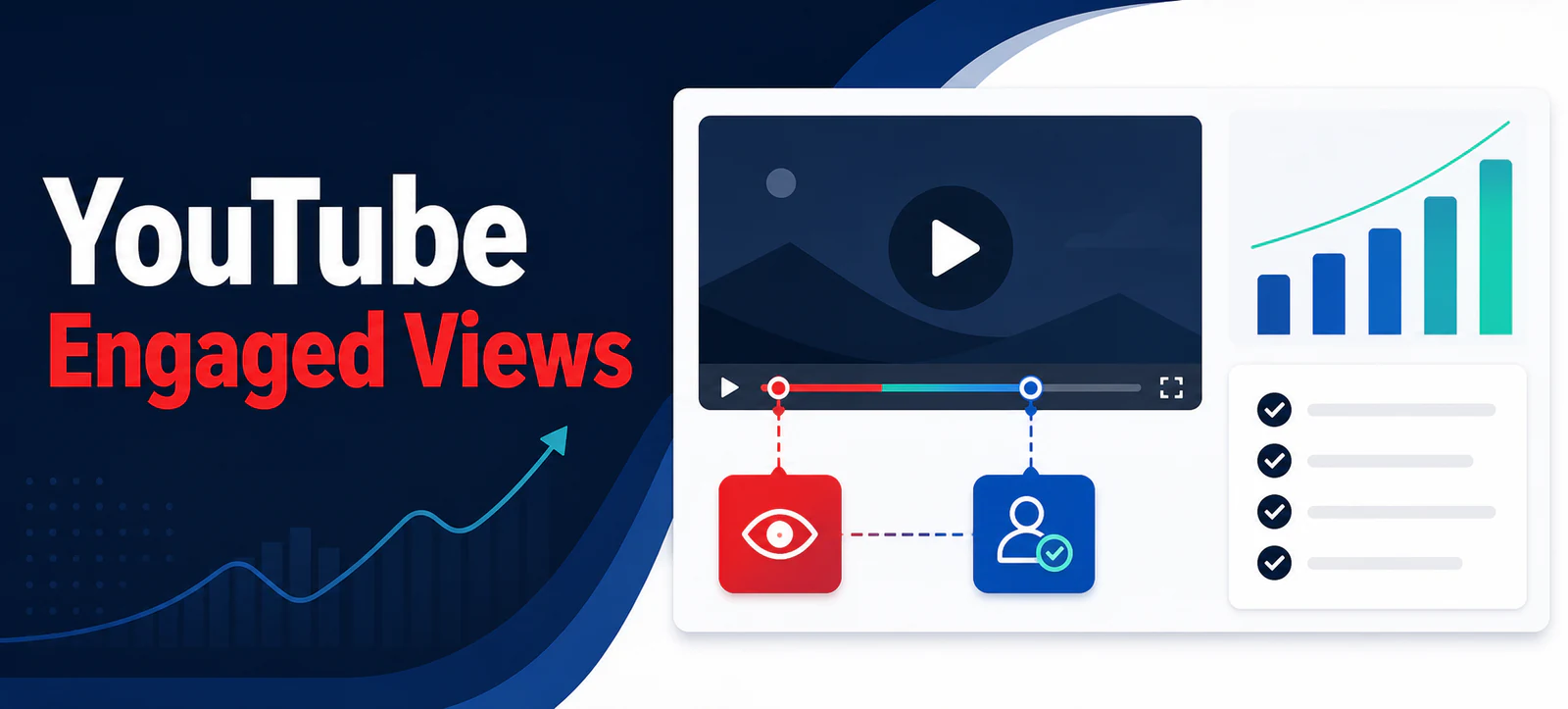
YouTube engaged views now have a clearer role in channel reporting. From 24 August 2026, YouTube counts a public view from the moment a video starts playing, while the previous view definition remains available as an engaged view in Analytics.
The change applies globally across Shorts, long-form video, podcasts and live content. Public view totals may therefore rise faster, but that does not automatically mean deeper attention, higher earnings or stronger commercial performance. Creators and brands need to read the two metrics together.
What changed on 24 August 2026
YouTube’s official explanation of engaged views says a view is now counted from the first frame across its formats. The previous method is called an engaged view and indicates that a viewer continued beyond that initial frame or clicked to watch.
The YouTube engagement metrics help page confirms the rollout and says the change does not affect YouTube Partner Program earnings or eligibility. The update standardises public counting; it is not described as a recommendation-algorithm change.
Public views and engaged views are different signals
Metric
What it indicates
Best use
Public view
The video began playing from its first frame
Assess initial exposure and visible scale
Engaged view
The viewer continued beyond the initial frame or clicked to watch
Compare meaningful continuation between videos
Thumbnail impression
An eligible thumbnail was shown without necessarily starting playback
Evaluate packaging and click behaviour where applicable
Watch time
How long people watched in total
Assess depth of consumption
Qualified views or hours
The measures YouTube applies to YPP eligibility
Track progress toward programme requirements
A higher public view count can be genuine exposure even when engaged views grow more slowly. That gap is not automatically a problem. It becomes useful when compared by format, traffic source and content objective.
What did not change
YouTube says the new public view definition does not change recommendations. It also does not change how creators qualify for or earn through the YouTube Partner Program. Earnings continue to depend on engaged Shorts views and engaged watch hours, while eligibility uses qualified Shorts views and qualified watch hours.
This distinction prevents a first-frame start from being confused with monetisable engagement. Creators should use the Earn area and the relevant Analytics fields when tracking YPP progress rather than relying on the public number shown beneath a video.
Where to find engaged views
YouTube says engaged views remain available in YouTube Analytics Advanced Mode. Open Analytics, enter Advanced Mode or See More, select the appropriate content type and add the engaged-views metric where available. Keep the date range and filters consistent when comparing videos.
Separate Shorts, long-form video, podcasts and live content before drawing conclusions. Viewing behaviour differs by format, and a combined channel total can hide what actually changed. Kayaar’s YouTube SEO checklist provides a broader workflow for reviewing titles, descriptions, thumbnails and discovery signals.
Annotate reports across the rollout date
Add 24 August 2026 as a reporting annotation. A public-view trend that crosses the rollout can reflect both audience behaviour and the revised counting method. Avoid presenting the whole increase as content growth without comparing engaged views, watch time and traffic sources.
For weekly or monthly dashboards, keep a note beside the metric definition and explain the break in continuity to clients or senior teams. If a campaign started before the change, report pre-change and post-change periods separately or use engaged views as the more consistent comparison where the data supports it.
Preserve an export of the original report and write the metric definition directly into recurring dashboard notes. When setting future targets, base them on data collected after the rollout or specify which measure the target uses. This prevents a creator, agency and brand from using the same word—views—for different calculations. It also protects year-on-year reporting from a misleading comparison when the content strategy stayed constant but the public counter changed.
Use both metrics to diagnose content
Public views show that playback began; engaged views provide a stronger signal that people continued. Track the relationship between them over time rather than inventing a universal target. A high-exposure, low-continuation pattern may justify reviewing the opening seconds, audience promise or traffic source.
If both measures rise alongside watch time and useful actions, the video is likely reaching more people without sacrificing attention. If engaged views rise but public reach remains limited, the content may satisfy viewers who find it while needing better packaging or distribution. Kayaar’s guide to YouTube Audio Ads helps separate paid-media objectives from organic video measurement.
What brands should request from creators
Do not evaluate a creator partnership from a public counter alone. Agree on the reporting window and request the relevant public views, engaged views, watch time, audience retention, traffic source and business action. The exact set should reflect whether the campaign aims for awareness, consideration, traffic or sales.
Ask whether paid promotion contributed to the result and keep ad-platform metrics separate from organic channel measures. Kayaar’s YouTube Shopping Amazon product-tag guide explains why clicks, qualifying purchases, returns and commission can matter more than views for commerce content.
A practical weekly review
Separate the report by content format and traffic source.
Compare public views with engaged views for the same period.
Review watch time, retention and the opening section of each video.
Check whether paid activity or a distribution change influenced exposure.
Record one evidence-based creative or distribution test for the next upload.
Keep the test focused so the team can connect a change with an outcome. Kayaar’s social performance review workflow offers a useful framework for turning platform data into a business decision rather than celebrating reach alone.
Key takeaway
YouTube’s new view count standard makes public exposure more consistent across formats, while engaged views preserve a measure of continued watching. Neither metric should stand alone. Document the rollout, compare like with like and connect attention with the video’s actual objective. For help building a clear reporting system, contact Kayaar.
FAQs
What is a YouTube engaged view?
An engaged view indicates that a viewer continued beyond the video’s initial frame or clicked to watch, using the definition that previously applied to a view.
When did YouTube change how public views are counted?
YouTube began using the first-frame public view definition globally across formats on 24 August 2026.
Will the new YouTube view count increase earnings?
Not by itself. YouTube says YPP earnings remain based on engaged Shorts views and engaged watch hours.
Did the YouTube recommendation algorithm change?
YouTube says the view-count update does not change recommendations. It standardises how public views are counted.
Where can creators find engaged views?
YouTube says creators can find engaged views in YouTube Analytics Advanced Mode.