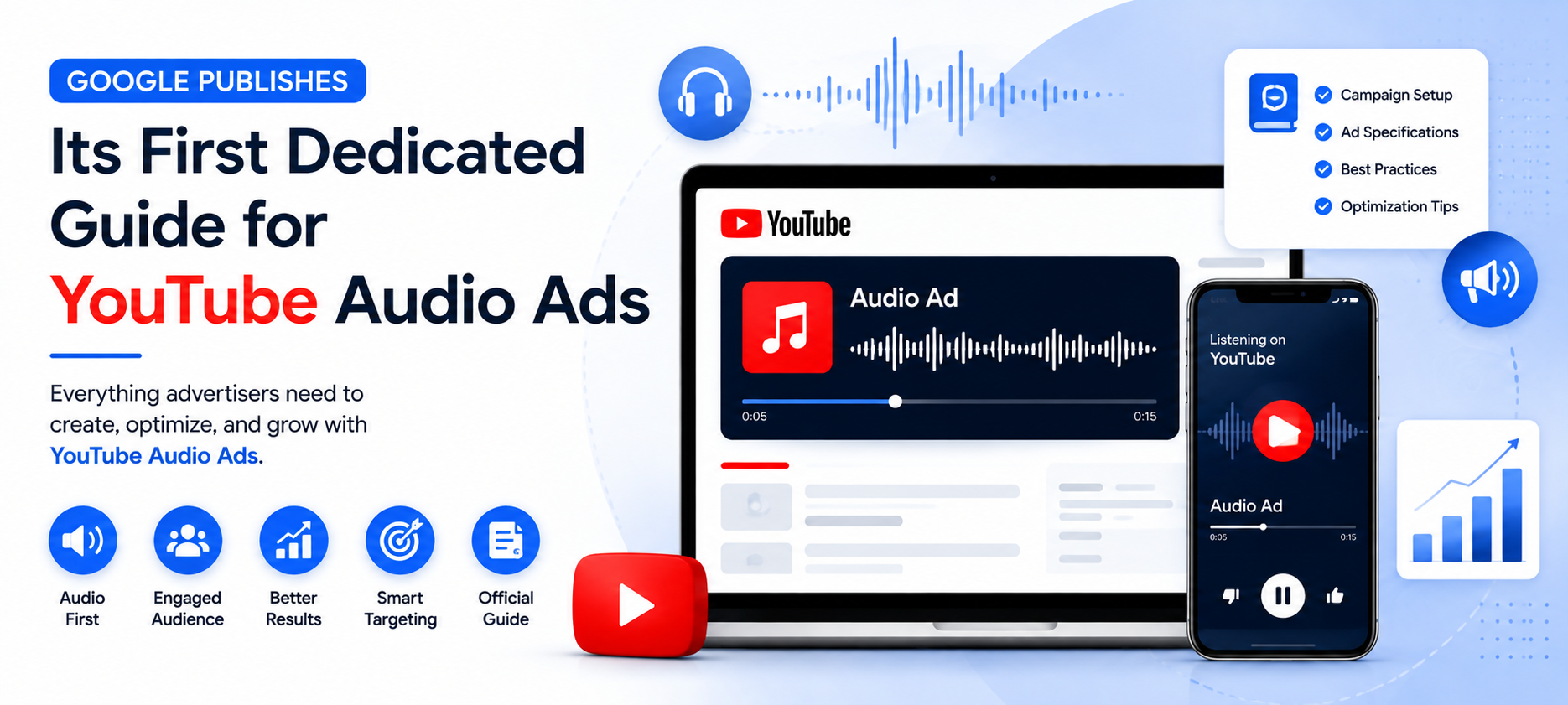
Google has introduced its first standalone guide for YouTube Audio Ads, giving advertisers a centralized resource to understand, create, and optimize audio advertising campaigns on YouTube. While the audio ad format has been available for several years, this is the first time Google has published a dedicated help page covering everything marketers need in one place.
The new guide simplifies campaign setup, technical requirements, creative specifications, and best practices, making it easier for businesses to leverage YouTube’s growing audio audience.
What Are YouTube Audio Ads?
YouTube Audio Ads are designed for users who primarily listen rather than watch, such as those streaming music playlists, podcasts, or other audio-focused content. Instead of relying on visuals, these ads deliver a compelling audio message while displaying a simple visual image or animation.
This format helps advertisers connect with audiences during moments when visual attention may be limited.
What’s Included in Google’s New Guide?
Google’s dedicated documentation brings together key information in one place, including:
Campaign creation steps
Audio ad specifications
Supported creative formats
Best practices for effective messaging
Campaign management tips
Technical requirements
Previously, advertisers had to search through multiple Google Ads help articles to find this information. The new guide makes the process much more straightforward.
Why This Update Matters
The release of an official guide reflects Google’s continued investment in audio advertising as more users consume content while commuting, working, exercising, or multitasking.
For advertisers, the update provides:
Easier campaign setup
Clearer creative guidelines
Better understanding of audio-first advertising
Faster onboarding for new advertisers
Improved campaign optimization
Best Practices for YouTube Audio Ads
To maximize campaign performance, advertisers should:
Deliver your main message within the first few seconds.
Use clear, professional voiceovers.
Keep branding consistent throughout the ad.
Include a strong call-to-action.
Pair audio with a clean, high-quality static image or simple animation.
Test multiple ad variations to improve performance.
Who Should Use YouTube Audio Ads?
This ad format works particularly well for:
Music streaming brands
Podcasts
Mobile apps
E-commerce businesses
Entertainment companies
Local businesses
Educational platforms
Digital service providers
Brands looking to increase awareness without relying heavily on video production can benefit from audio-focused campaigns.
What This Means for Digital Marketers
The launch of a dedicated guide makes YouTube Audio Ads more accessible for businesses of all sizes. With clear documentation now available, marketers can spend less time navigating technical requirements and more time creating engaging campaigns.
As audio consumption continues to grow, advertisers who experiment with this format may discover new opportunities to reach audiences in moments when traditional video ads are less effective.
Final Thoughts
Google’s first official guide for YouTube Audio Ads is a welcome resource for advertisers looking to expand their digital marketing strategies. By bringing campaign setup, specifications, and best practices into a single reference, Google has made it easier than ever to launch and optimize audio advertising campaigns on YouTube.
For businesses seeking new ways to build brand awareness and connect with engaged listeners, YouTube Audio Ads are becoming an increasingly valuable addition to the digital advertising toolkit.