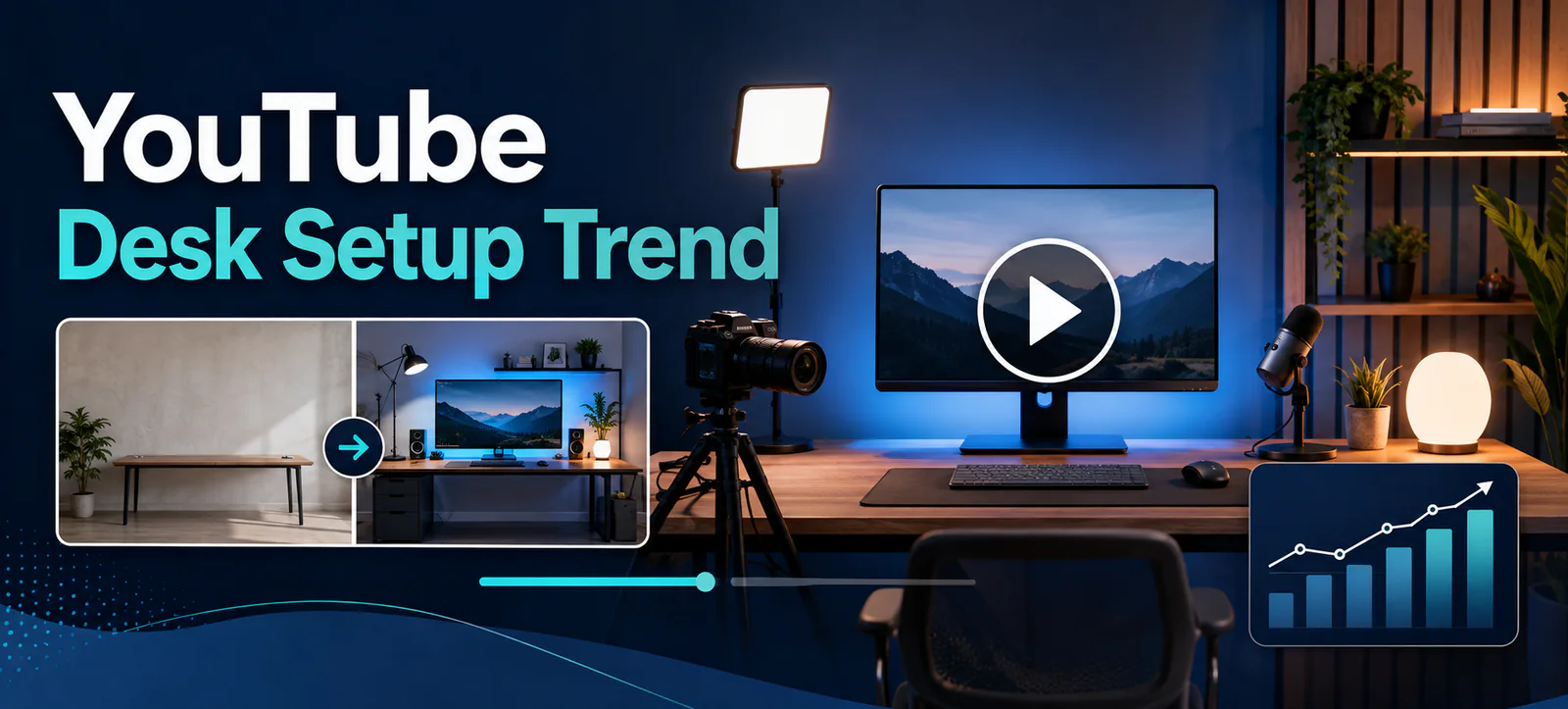
YouTube desk setup trend content has become a substantial workspace, productivity and design niche. YouTube reports that videos with “desk setup” or “#desksetup” in their titles received more than 250 million views globally during the first half of 2026.
The number signals audience interest, not guaranteed performance for every brand. The useful lesson is how successful workspace videos combine transformation, practical detail, personal identity and clear visual storytelling. Brands can apply those principles without forcing products into an unrelated trend.
What YouTube reported
YouTube’s official desk setup trend report describes creators sharing workspace tours, makeovers and organisation ideas across work-from-home, gaming and productivity contexts. Its 250-million-view figure covers titles containing the specified phrase or hashtag from 1 January to 30 June 2026.
This is a title-based dataset, so it should not be presented as the total audience for every workspace video. It does show that viewers actively seek recognisable desk-setup content at meaningful scale.
Why the format attracts attention
A desk is both functional and personal. Viewers can learn how equipment is arranged, compare products, see a visible before-and-after result and borrow ideas for their own space. The content also offers a natural sequence: problem, plan, transformation and practical review.
That structure makes products easier to understand in context. A lamp, monitor arm or storage tool is not only displayed; viewers see where it fits, what problem it solves and whether the result looks usable. Credibility depends on showing limitations as well as benefits.
Content lessons brands can use
Trend element
Audience value
Brand application
Before and after
Makes progress immediately visible
Show one genuine problem and measurable improvement
Process sequence
Keeps the story easy to follow
Build content around setup, use and review
Practical detail
Helps viewers make decisions
Explain dimensions, compatibility and trade-offs
Creator identity
Makes similar spaces feel distinctive
Preserve the creator’s real voice and workflow
Visual proof
Shows rather than merely claims
Demonstrate the product under normal conditions
Start with an audience problem
A useful concept begins with a specific constraint: a small desk, cable clutter, poor lighting, shared space, limited budget or discomfort during long sessions. Choose a problem that the product can genuinely help solve.
Avoid starting with a list of items the brand wants mentioned. That produces a catalogue rather than a story. Ask what the viewer should be able to improve after watching, then select only the products needed to support that outcome.
Design the video around transformation
Show the original setup clearly, explain the plan and document the important decisions. Use wide shots for orientation and close-ups for installation, controls and materials. Keep the transformation believable; an expensive total replacement may be visually impressive but less useful to the intended audience.
Build a strong opening that previews the problem and result without giving away every detail. Kayaar’s YouTube SEO checklist covers titles, descriptions, thumbnails and other discovery elements that should accurately represent the finished video.
Make product integration credible
State whether an item was supplied, sponsored or linked through an affiliate programme, following applicable platform and legal requirements. Let creators describe real experience and retain reasonable criticism. A positive claim carries more weight when viewers can see how it was tested.
Verify model names, availability, prices and compatibility before publication. If a product is tagged, confirm that the tag leads to the exact item shown. Kayaar’s YouTube Shopping product-tag guide explains why product accuracy, eligibility and final purchase data matter.
Plan one idea across several formats
A long-form makeover can explain the complete process. Shorts can isolate the strongest reveal, one practical tip or a common mistake. A community post can ask viewers which constraint should shape the next setup. Each version should make sense independently rather than simply cutting random moments.
Keep the promise consistent across formats while adjusting pacing and framing. Vertical content needs a composition that remains readable on a phone; wide video can provide more spatial context. Reuse does not mean publishing the same edit everywhere.
Protect production quality and accessibility
Plan lighting, audio and cable safety before filming. Avoid rapid decorative edits that hide how the setup works. Include captions, describe important visual changes in the narration and keep on-screen labels large enough to read on mobile devices.
Show installation steps at a useful speed and identify when specialist help may be required. If the makeover includes electrical work, heavy mounting or expensive equipment, do not encourage viewers to copy unsafe work. Responsible detail strengthens trust and makes the content useful beyond its visual reveal.
Measure more than public views
YouTube’s content performance guidance explains that Analytics helps creators understand how audiences find and interact with content. Review traffic sources, engaged views, watch time, retention and relevant business actions.
Since YouTube changed public view counting on 24 August 2026, annotate reports that cross the rollout. Kayaar’s engaged views guide explains why first-frame public views and continued watching should be read together.
For a sponsored video, define success before production. Awareness may prioritise qualified reach and retention; commerce may require product clicks, sales, returns and customer quality. Do not declare success from a large public counter alone.
A practical campaign workflow
Choose one audience and one workspace problem.
Agree on truthful claims, disclosure and creative freedom.
Film the starting point, decision process and final result.
Create format-specific edits with accurate titles and thumbnails.
Measure attention and business outcomes against the agreed goal.
Use a short review cycle to capture viewer questions and improve the next video. Kayaar’s social performance review workflow provides a practical structure for moving from platform metrics to a business decision.
Key takeaway
The YouTube desk setup trend works because it turns an everyday space into a visible, useful story. Brands should borrow the problem-solving structure, not copy a creator’s aesthetic. Demonstrate genuine value, preserve creator credibility and measure the outcome that matters. For help designing a practical content plan, contact Kayaar.
FAQs
How popular are desk setup videos on YouTube?
YouTube reports more than 250 million global views in the first half of 2026 for videos with “desk setup” or “#desksetup” in their titles.
Why do viewers watch desk setup content?
The format combines visible transformation, practical product detail, organisation ideas and personal workspace identity.
Should brands copy popular desk setup videos?
No. Use the problem-solving structure while preserving the creator’s authentic style and demonstrating a relevant product honestly.
Which metrics should a desk setup campaign track?
Track relevant reach, engaged views, watch time, retention and the business action defined for the campaign, such as qualified clicks or sales.
Can one desk setup idea work across Shorts and long-form video?
Yes. Use long-form video for the full process and create self-contained Shorts around the reveal, one tip or one mistake.