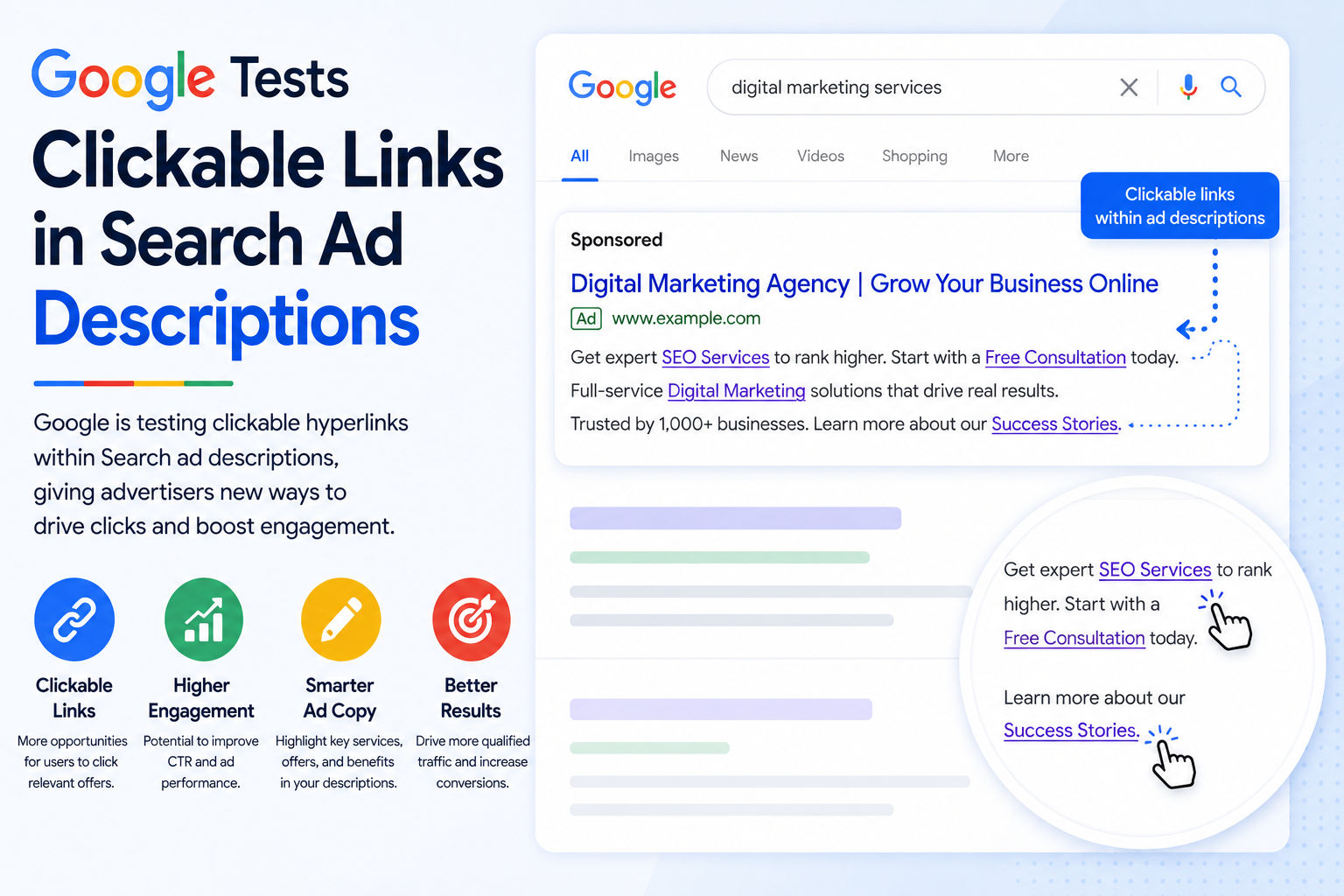
Google is experimenting with a new Search advertising format that could change the way users interact with paid search results.
The company has been spotted testing clickable text within Search ad descriptions, potentially allowing users to click certain phrases directly from the descriptive part of an advertisement.
The experiment could give advertisers another opportunity to attract visitors while making Search ads more interactive. However, the feature is still being tested and should not yet be considered a permanent part of Google’s advertising system.
A New Way to Interact With Search Ads
Google Search ads already provide several clickable elements, including headlines and sitelinks. The new experiment appears to take this functionality one step further by placing clickable phrases directly inside the description.
For advertisers, this could create additional opportunities to highlight important parts of an offer.
For example, an advertisement promoting digital marketing services might include phrases such as:
SEO Services
Free Consultation
Digital Marketing Solutions
Get a Quote
If these phrases become clickable, users could potentially interact with the advertisement based on the specific information that catches their attention.
How the Test Could Affect Advertisers
The biggest potential benefit is additional engagement.
Search advertising is highly competitive, and even small improvements in how users interact with an ad can influence campaign performance.
Clickable text could help advertisers:
Highlight important services or products
Make descriptions more actionable
Provide additional interaction points
Encourage qualified website visits
Potentially improve click-through rates
However, there is no guarantee that the experiment will automatically improve performance. Results will depend on factors such as ad relevance, user intent, competition and landing-page quality.
Clickable Text vs. Traditional Sitelinks
The experiment should not be confused with Google’s existing sitelink assets.
Sitelinks appear as additional links beneath an advertisement and can direct users to specific pages on a website. Clickable description text, on the other hand, appears to be integrated directly into the main ad copy.
This could make the description itself more interactive instead of functioning only as supporting information.
Google already provides advertisers with multiple assets designed to make Search ads more useful and engaging.
Why Ad Copy Could Become More Important
If Google eventually introduces clickable phrases more widely, advertisers may need to rethink how they write Search ad descriptions.
Instead of treating descriptions as simple supporting text, marketers could strategically use them to emphasize their most valuable offers.
Effective descriptions should clearly communicate:
What the business provides
The main customer benefit
A reason to take action
Relevant products or services
A clear call to action
The goal should still be to write naturally rather than filling descriptions with repetitive keywords.
Relevance Will Remain Essential
More clickable elements do not necessarily mean better advertising.
If a user clicks an ad and lands on a page that doesn’t match the advertisement, the additional interaction may not lead to a valuable conversion.
Advertisers should therefore maintain a strong connection between:
A consistent customer journey can help users quickly understand what they are getting after clicking an advertisement.
What Advertisers Should Prepare For
Although the feature is currently experimental, businesses can use this development as an opportunity to review their existing Google Ads campaigns.
Consider improving your ads by:
Writing Clear Descriptions
Explain your product or service quickly and avoid unnecessary wording.
Highlighting Strong Benefits
Tell potential customers what makes your offer valuable.
Using Relevant Calls to Action
Encourage users to take a specific next step, such as booking, purchasing or requesting information.
Improving Landing Pages
Make sure the destination page provides exactly what the advertisement promises.
Testing Different Messages
Experiment with different benefits, offers and calls to action to identify which messages generate better engagement.
Will Clickable Ad Descriptions Become Permanent?
At this stage, advertisers should consider the feature an experiment rather than a confirmed Google Ads rollout.
Google regularly tests different Search formats and advertising experiences. Some experiments eventually become widely available, while others are modified or discontinued.
Therefore, businesses should continue following Google’s established Search advertising best practices rather than changing their entire strategy around this test.
What This Means for PPC Marketing
The experiment highlights a broader trend in paid search: Google is making advertisements increasingly interactive.
Search ads are no longer limited to a simple headline, description and destination URL. Google continues to experiment with different assets and formats that can provide users with more information and more ways to interact with businesses.
For PPC professionals, this means creating strong ad copy and maintaining relevant landing pages will remain important as advertising formats continue to evolve.
Final Thoughts
Google’s experiment with clickable links inside Search ad descriptions could provide advertisers with another way to attract attention and generate website visits.
If Google eventually rolls out the feature more broadly, advertisers may have greater flexibility when presenting products, services and calls to action within their Search ads.
For now, businesses should monitor the development while continuing to focus on the fundamentals of successful PPC campaigns: relevance, compelling messaging, strong landing pages and measurable conversions.