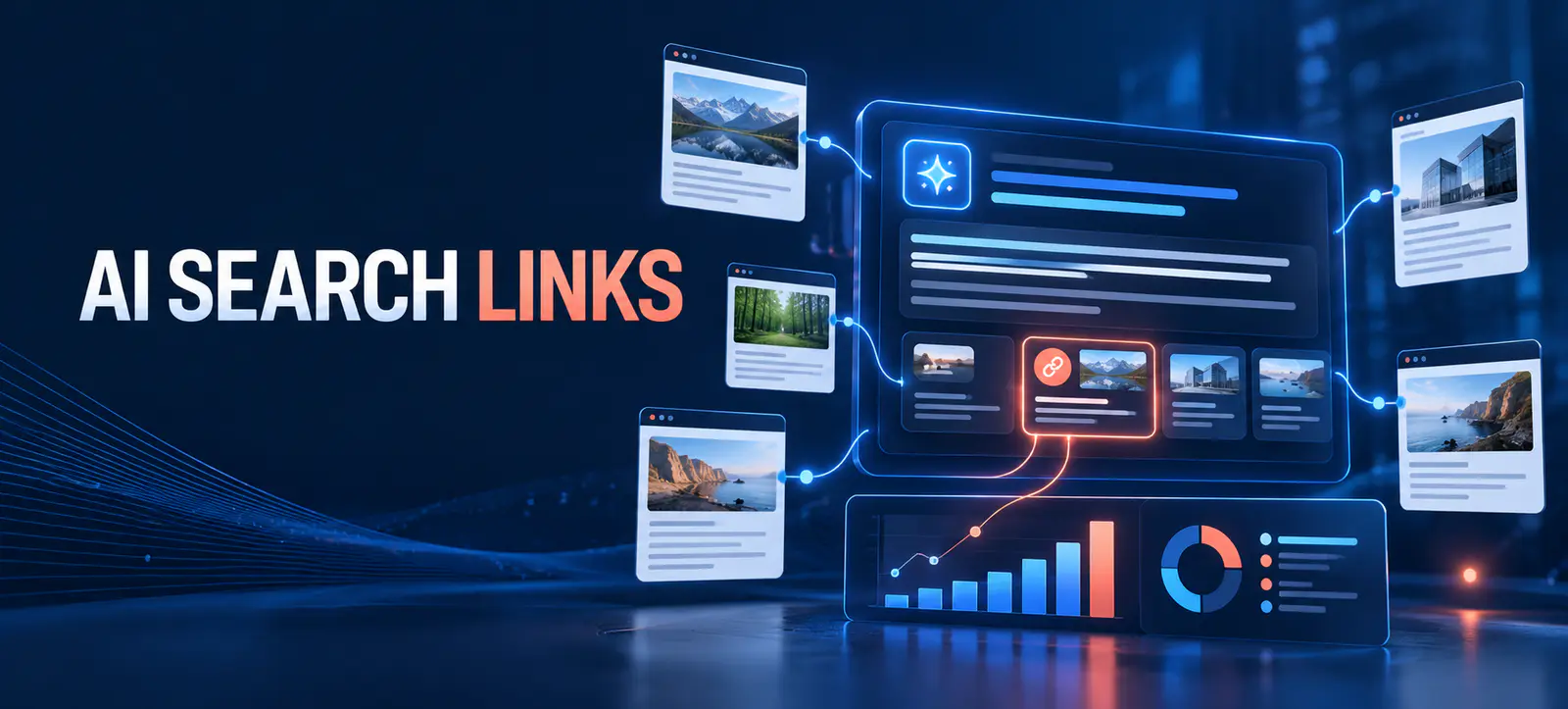
Google AI Search links are becoming more prominent across AI Mode and AI Overviews. Google is placing inline sources higher, surfacing useful official pages and making related articles easier to explore.
For publishers, this creates opportunities but no guaranteed traffic. A visible source still needs a clear promise that earns the click. The useful response is a page-level visibility audit, not an attempt to manipulate citations.
What Google changed in AI Search
In its 15 October announcement, Google described five updates to help people explore the web from generative Search experiences:
Inline links are appearing higher in AI responses more frequently.
A new test may place one or two especially useful pages in a dedicated top section with explanatory context.
Prominent timely-article carousels are expanding to more locations and languages.
Related links at the end of some responses are getting larger presentation and image thumbnails.
Clickable creator and publisher names are being tested on video results in AI Mode, linking to Search profiles.
Important limit: Google has not announced a special ranking method, schema type or guaranteed citation process for these link treatments. Some elements are tests or gradual rollouts, so availability can vary by query, language, location and account.
What the update means for publishers
The update changes how a source may be presented, not the need for an indexable, useful page. Google’s AI features guidance says pages must be indexed and eligible for a snippet. No special AI files or structured data are required.
More visible links can highlight pages matching part of a complex question. AI Mode may use query fan-out, so a focused guide, original comparison or authoritative task page may support a broader response.
A strong resource should satisfy its main intent, make evidence easy to verify and offer depth after the initial answer. Kayaar’s AI Mode content workflow provides a practical foundation.
Publisher visibility audit areas
Audit area
Question to answer
Evidence to review
Avoid
Intent
Does the page solve one identifiable task?
Opening answer, headings and user journey
Combining unrelated keywords
Source value
Why would this page support a response?
Original detail, examples and first-party evidence
Rewriting common summaries
Link promise
Does the title accurately describe the destination?
Title, snippet, visible H1 and page content
Clickbait or vague wording
Media
Can images or video clarify the topic?
Relevant files, captions and accessible text
Decorative media presented as proof
Measurement
Does visibility create useful visits?
Search Console, analytics and conversions
Counting citations as revenue
1. Audit the page’s primary answer
Choose pages connected to important customer questions or high-value tasks. Read the first three paragraphs without the title. The subject, audience and answer should be clear. Remove introductions that delay the response.
Check whether each heading advances the same intent. If a section answers a different search need, move it to a more suitable page and link naturally. This reduces cannibalisation and gives search systems a clearer destination for each subtopic.
2. Strengthen source-worthy evidence
Add information that can be checked: a first-party observation, original process, clear comparison, current specification or expert limitation. Link to primary material for time-sensitive claims and show update context where useful.
Do not invent studies, customer outcomes or experience. A concise page with defensible evidence is stronger than a long page built from generic statements. Explain what a platform has confirmed, what remains a test and what is your professional recommendation.
3. Improve the link promise
Google is making some links more visual and adding context about why a page is useful. Review the title, visible heading, description and opening content as one promise. They should use consistent language and accurately describe what a visitor will receive.
Thumbnails may appear with some related links, so use an original, relevant image that remains understandable when reduced. The image should support the topic rather than introduce a claim missing from the article. Maintain descriptive ALT text for accessibility, not as a place to repeat multiple keywords.
4. Connect publisher and creator identity
Google is testing clickable creator and publisher names on video results in AI Mode. Eligible profiles can bring together website, social and video activity. Kayaar’s Search Profile Badge guide explains current eligibility, identity checks and accessible website implementation.
Keep visible bylines, author pages and structured data consistent. Do not create a profile merely to claim authority or combine unrelated people and brands. Identity signals should reflect the real publisher or creator responsible for the content.
5. Use Preferred Sources responsibly
Google says timely-article carousels can highlight sources a person has chosen. A publisher with a repeat audience can offer Google’s approved preference control after delivering useful content. The Preferred Sources button guide explains placement, wording and accessibility.
Treat it as a reader choice, not a ranking tactic. Do not interrupt the answer with aggressive prompts or claim the feature guarantees visibility. Earn preference through accurate, distinctive and consistently helpful publishing.
6. Measure outcomes without inventing a citation score
Annotate the rollout date and monitor priority pages in Search Console and analytics. Review impressions, clicks, landing-page engagement and qualified conversions over comparable periods. Segment by country, device and page where the available data supports it.
Do not present a changing sample of AI responses as a stable ranking report. Results can vary by query and context. Kayaar’s Search Console AI performance guide shows how to separate visibility from actual traffic and business value.
Final audit checklist
The page answers one clear audience task early.
Important claims use current, first-party evidence.
The title and opening accurately promise the page content.
Images and video add genuine context and remain accessible.
Publisher or creator identity is accurate and consistent.
Performance is judged by useful visits and outcomes, not screenshots.
More prominent Google AI Search links can make useful sources easier to discover, but eligibility and presentation remain dynamic. Improve pages for real readers, validate technical access and measure the result over time. For an independent content and visibility review, contact Kayaar.
FAQs
What changed with Google AI Search links?
Google is placing inline links higher more often, testing prominent top links, expanding timely-article carousels, improving related-link presentation and testing clickable creator or publisher names on video results.
Is there special schema for AI Mode links?
No. Google says there is no special structured data or machine-readable AI file required. Pages must follow normal Search requirements and be indexed and eligible for a snippet.
Do more prominent links guarantee publisher traffic?
No. The treatments can make sources easier to discover, but appearance and clicks depend on the query, relevance, rollout and user choice. Traffic is not guaranteed.
How should publishers optimise for inline links?
Use established SEO fundamentals: publish useful original content, answer the intent clearly, support claims, maintain crawlability, use accurate titles and connect pages through relevant internal links.
How should the update be measured?
Annotate the rollout and review impressions, clicks, engagement and conversions for priority pages over comparable periods. Avoid treating changing AI response samples as a fixed ranking score.