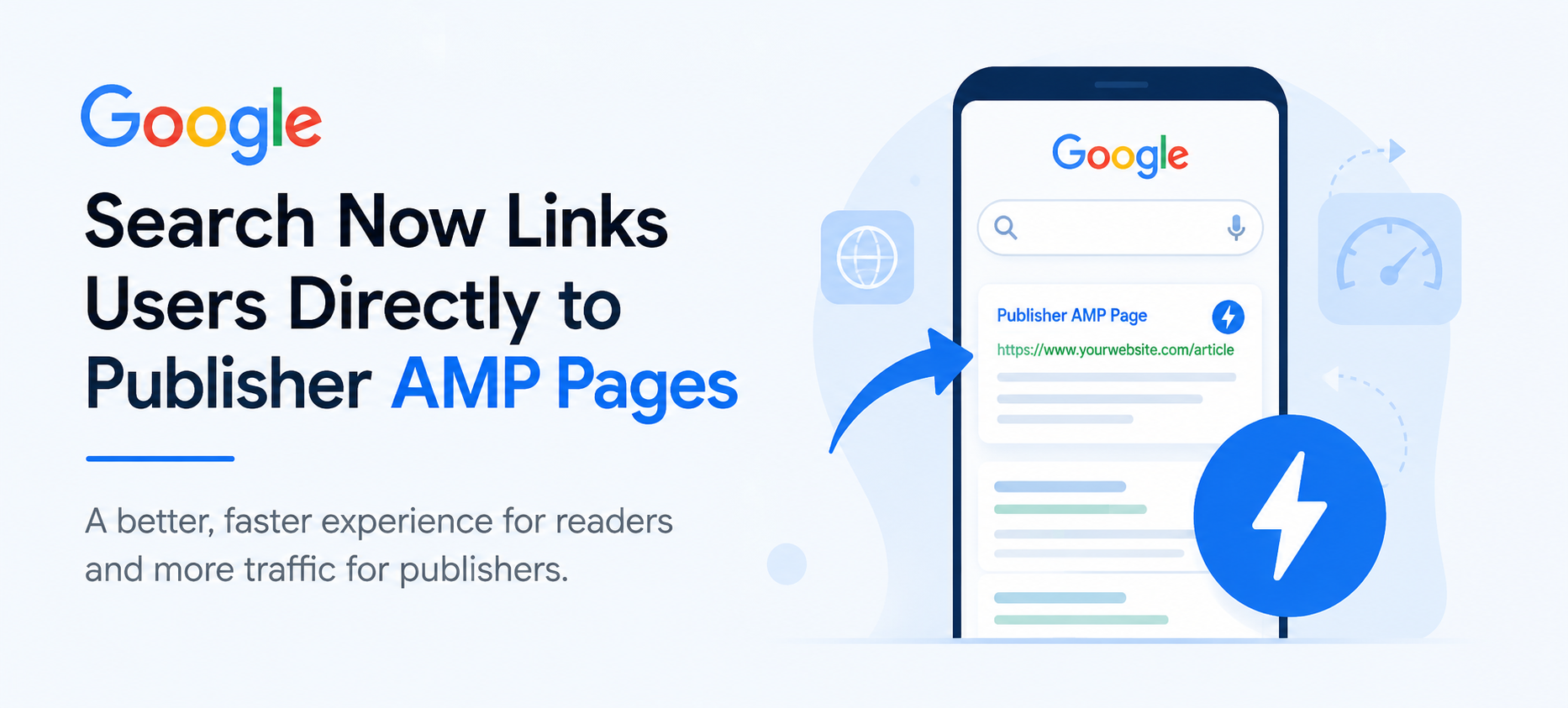
Google continues to refine the search experience for both users and publishers. One of its latest updates ensures that people searching on mobile devices are taken directly to AMP (Accelerated Mobile Pages) hosted by publishers instead of viewing cached versions served by Google.
This change gives website owners greater control over their content while offering visitors a more transparent browsing experience.
What Are Publisher-Hosted AMP Pages?
AMP (Accelerated Mobile Pages) is an open-source framework created to make web pages load faster on mobile devices.
Previously, many AMP pages were displayed from Google’s cache, meaning users often remained within a Google-hosted URL. With the latest update, visitors are now directed straight to the publisher’s own domain while still enjoying the speed benefits of AMP.
Why This Update Matters
This improvement offers several advantages for website owners and digital publishers.
Stronger Brand Identity
Visitors now land directly on your website instead of a Google cache URL. This helps improve brand recognition and builds greater trust with your audience.
Better User Experience
Users can easily identify the website they are visiting, making navigation more transparent and reducing confusion.
Improved Analytics
Traffic now reaches your own domain directly, allowing website owners to collect more accurate analytics and understand user behavior more effectively.
Easier Content Sharing
When users copy or share a page link, they share your website’s URL instead of a Google-hosted version, helping increase direct traffic and brand visibility.
SEO Benefits
Although this update does not directly improve search rankings, it supports several important SEO advantages:
Better brand visibility in search results
More accurate traffic measurement
Improved user trust
Cleaner URL sharing
Enhanced website authority
These factors contribute to a stronger overall SEO strategy.
Should You Still Use AMP?
Whether AMP is right for your website depends on your goals.
AMP can still provide:
Faster mobile page loading
Improved user experience
Reduced bounce rates
Better performance on slower internet connections
However, with modern technologies such as Core Web Vitals optimization, responsive design, and efficient caching, many websites can achieve similar performance without implementing AMP.
What Website Owners Should Do
If your website currently uses AMP, ensure that:
AMP pages are correctly validated.
Canonical URLs are properly configured.
Analytics tracking is functioning correctly.
Internal links point to the appropriate pages.
Structured data is implemented where relevant.
Regular technical audits can help maintain optimal performance and search visibility.
Final Thoughts
Google’s decision to direct users to publisher-hosted AMP pages marks a positive step toward improving transparency and giving publishers greater ownership of their content. By sending visitors directly to the publisher’s website, businesses gain stronger branding, better analytics, and an improved user experience while continuing to benefit from fast-loading mobile pages.
For website owners and SEO professionals, this update reinforces the importance of maintaining a technically optimized website that delivers both speed and trust.